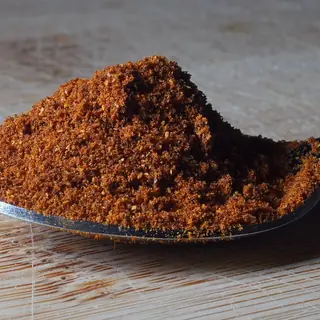
Paprika
Capsicum
Herbs & spices · Solanaceae family
- 282kcal
- 14.1 gprotein
- 34.9 gfibre
Per 100 g, raw.
What 100 g is made of
- Protein 14.1 g
- Fat 12.9 g
- Carbohydrate 54 g
- Water and other 19 g
“Water and other” is what is left of 100 g after protein, fat and carbohydrate (mostly water, plus ash).
Vitamins and minerals in 100 g
Bars show the share of the US adult daily value. The rank compares 260 ingredients.
- Sodium68 mg · 3% · #84 of 258
- Potassium2,280 mg · 49% · #6 of 256
- Calcium229 mg · 18% · #42 of 258
- Iron21.1 mg · 117% · #14 of 259
- Magnesium178 mg · 42% · #28 of 256
- Zinc4.3 mg · 39% · #20 of 256
- Vitamin C0.9 mg · 1% · #136 of 239
- Folate49 µg · 12% · #69 of 237
- Vitamin A2,463 µg · 274% · #2 of 237
- Vitamin B120 µg · 0% · #66 of 236
Where it comes from
- 1600sIndustrial production of paprika began near the end of the 17th century.
- 1920sUntil the 1920s, Central European paprika was hot; a breeder then developed plants with sweet fruit.Europe
Used in GlobeCooks dishes from: Europe (3), Africa (1), Americas (1), Asia (1)
Native range and history are drawn from Wikipedia and Wikidata by GlobeCooks.
More herbs & spices
Nutrients: USDA FoodData Central (food 171329), public domain. Identity: Wikidata Q3127593. Compiled by GlobeCooks.