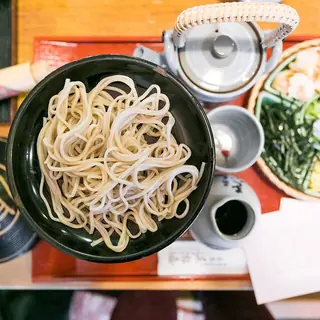
Soba
Grains, flours & pasta
- 99kcal
- 5.1 gprotein
- —fibre
Per 100 g, cooked.
What 100 g is made of
- Protein 5.1 g
- Fat 0.1 g
- Carbohydrate 21.4 g
- Water and other 73.4 g
“Water and other” is what is left of 100 g after protein, fat and carbohydrate (mostly water, plus ash).
Vitamins and minerals in 100 g
Bars show the share of the US adult daily value. The rank compares 260 ingredients.
- Sodium60 mg · 3% · #89 of 258
- Potassium35 mg · <1% · #234 of 256
- Calcium4 mg · <1% · #233 of 258
- Iron0.48 mg · 3% · #158 of 259
- Magnesium9 mg · 2% · #213 of 256
- Zinc0.12 mg · 1% · #213 of 256
- Vitamin C0 mg · 0% · #154 of 239
- Folate7 µg · 2% · #169 of 237
- Vitamin A0 µg · 0% · #163 of 237
- Vitamin B120 µg · 0% · #66 of 236
Where it comes from
- 1574A temple record describes soba being served to workers repairing its main hall.Japan
- 1603–1868Modern soba originated in the Edo period, centered on what is now Tokyo.Japan
- 1643A cookbook published in 1643 contained a soba recipe.Japan
- 1657Soba shops became more common in Tokyo after the Great Fire of Meireki.Japan
Used in GlobeCooks dishes from: Asia (1)
Native range and history are drawn from Wikipedia and Wikidata by GlobeCooks.
More grains, flours & pasta
Nutrients: USDA FoodData Central (food 168907), public domain. Identity: Wikidata Q753910. Compiled by GlobeCooks.