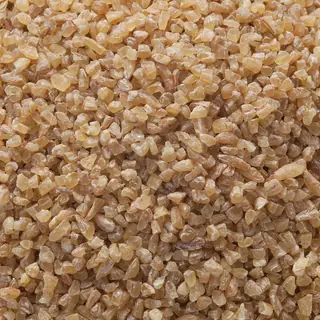
Bulgur
Grains, flours & pasta
- 372kcal
- 11.8 gprotein
- 11.7 gfibre
Per 100 g, raw.
What 100 g is made of
- Protein 11.8 g
- Fat 2.4 g
- Carbohydrate 75.9 g
- Water and other 9.9 g
“Water and other” is what is left of 100 g after protein, fat and carbohydrate (mostly water, plus ash).
Vitamins and minerals in 100 g
Bars show the share of the US adult daily value. The rank compares 260 ingredients.
Where it comes from
- about 4000 BCEBulgur originated in the ancient Middle East around 4000 BCE.
- 1900sArmenian, Syrian and Jewish immigrants brought bulgur to North America in the 20th century.Americas
Used in GlobeCooks dishes from: Asia (1)
Native range and history are drawn from Wikipedia and Wikidata by GlobeCooks.
More grains, flours & pasta
Nutrients: USDA FoodData Central (food 2710820), public domain. Identity: Wikidata Q250432. Compiled by GlobeCooks.