Sky tonight
The sky tonight over Reykjavik
When the International Space Station flies over, which planets are up, the moon and the clouds, worked out for your spot. Plus rocket launches, asteroids passing Earth.
Showing Reykjavik, Capital Region, Iceland. Not this one? Reykjavik Airport, Capital Region, Iceland
Darkness
Dark now
light again 8:58 AM · sunrise 9:59 AM
Moon
First quarter, 38% lit
rises Mon, Nov 16, 3:35 PM · sets Mon, Nov 16, 10:43 PM
Full Tue, Nov 24 · new Wed, Dec 9
Clouds tonight
Partly cloudy (48% cover)
5:00 AM8:00 AM
Planets tonight
Times in Atlantic/Reykjavik. “Highest” is when it stands highest in the dark sky.
Mercury
Not up in the dark tonight
Venus
Up from 8:05 AM until dawn
Highest 8:55 AM, 12° up in the SSE
dazzling (mag -4.8) · in Virgo
Mars
Up at dusk until dawn
Highest 7:45 AM, 41° up in the S
bright (mag 0.7) · in Leo
Jupiter
Up at dusk until dawn
Highest 7:35 AM, 39° up in the S
very bright (mag -2.1) · in Leo
Saturn
Not up in the dark tonight
Space Station passes, next 3 days
Passes higher than 10°. “Visible” passes happen while it is dark where you are but the station is still in sunlight: look for a steady, bright moving star.
- Mon, Nov 16, 9:34 PMS → S (10° high) → S1 minnot visible (daylight or in Earth’s shadow)
- Tue, Nov 17, 8:47 PMS → S (10° high) → S1 minnot visible (daylight or in Earth’s shadow)
Worked out from CelesTrak orbit data with the SGP4 model; accurate to about a minute. See the station now on Live Earth.
Upcoming rocket launches
Times in Atlantic/Reykjavik. Dates move often; “NET” means no earlier than.
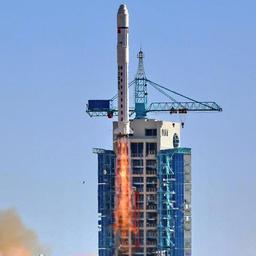 Long March 2D | Unknown Payload
Wed, Nov 18, 10:50 PM (in 3 days) · NET, hour
China Aerospace Science and Technology Corporation · Taiyuan Satellite Launch Center, People's Republic of China
Go for Launch
 Falcon 9 Block 5 | USSF-317
Thu, Nov 19, 3:00 AM (in 3 days)
SpaceX · Vandenberg SFB, CA, USA
Go for Launch
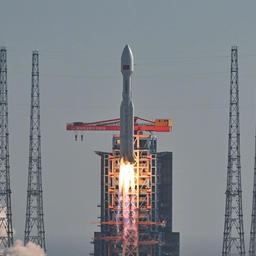 Long March 8A | SatNet LEO Group TBD?
Fri, Nov 20, 11:00 AM (in 4 days) · NET, hour
China Aerospace Science and Technology Corporation · Wenchang Space Launch Site, People's Republic of China
To Be Confirmed
 Falcon 9 Block 5 | NROL-136
Sat, Nov 21, 12:30 PM (in 5 days)
SpaceX · Vandenberg SFB, CA, USA
Go for Launch
 Ariane 64 Block 2 | Amazon Leo (LE-04)
Mon, Nov 23, 12:00 AM (in 7 days) · NET, day
Arianespace · Guiana Space Centre, French Guiana
To Be Determined
- Falcon 9 Block 5 | USSF-266
Mon, Nov 23, 4:04 PM (in 7 days)
SpaceX · Vandenberg SFB, CA, USA
Go for Launch
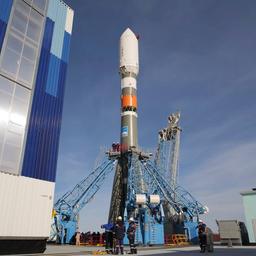 Soyuz 2.1b | Progress MS-36 (97P)
Tue, Nov 24, 5:03 AM (in 8 days)
Russian Federal Space Agency (ROSCOSMOS) · Baikonur Cosmodrome, Republic of Kazakhstan
To Be Confirmed
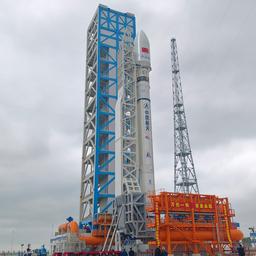 Long March 12 | SatNet LEO Group TBD?
Tue, Nov 24, 7:00 AM (in 8 days) · NET, hour
China Aerospace Science and Technology Corporation · Wenchang Space Launch Site, People's Republic of China
To Be Confirmed
Data from The Space Devs Launch Library 2.
Asteroids passing Earth, next 60 days
Every known object coming within 0.05 au (about 19 times the Moon’s distance). None of these is on a collision course.
| Object | Closest | Distance | Size (est.) | Speed |
|---|---|---|---|---|
| 2026 VW15 | Mon, Nov 16 | 5.1× Moon | 10 m–23 m | 6.1 km/s |
| 2026 VM3 | Mon, Nov 16 | 8.1× Moon | 9 m–20 m | 3.7 km/s |
| 2026 VJ13 | Tue, Nov 17 | 3.5× Moon | 9 m–21 m | 10.4 km/s |
| 2023 VE6 | Tue, Nov 17 | 18.3× Moon | 10 m–22 m | 10.1 km/s |
| 2026 VB13 | Tue, Nov 17 | 9.9× Moon | 24 m–53 m | 20.5 km/s |
| 2022 VB2 | Tue, Nov 17 | 7.7× Moon | 25 m–55 m | 9.0 km/s |
| 2012 VF46 | Wed, Nov 18 | 16.5× Moon | 51 m–113 m | 11.2 km/s |
| 2026 VY18 | Wed, Nov 18 | 10.0× Moon | 26 m–58 m | 17.5 km/s |
| 2018 NE1 | Thu, Nov 19 | 16.6× Moon | 56 m–124 m | 13.3 km/s |
| 2026 VA11 | Thu, Nov 19 | 8.7× Moon | 9 m–21 m | 8.9 km/s |
| 2026 TB84 | Thu, Nov 19 | 12.1× Moon | 50 m–111 m | 9.9 km/s |
| 2026 VD6 | Fri, Nov 20 | 10.4× Moon | 12 m–26 m | 9.4 km/s |
| 2026 VN11 | Sat, Nov 21 | 5.2× Moon | 31 m–68 m | 7.1 km/s |
| 2026 VD9 | Sat, Nov 21 | 10.2× Moon | 24 m–53 m | 4.7 km/s |
| 2026 VY15 | Sat, Nov 21 | 9.5× Moon | 21 m–46 m | 13.2 km/s |
Data from NASA JPL’s close-approach database. Sizes are estimated from brightness, so they are ranges.