Art explorer / The Met
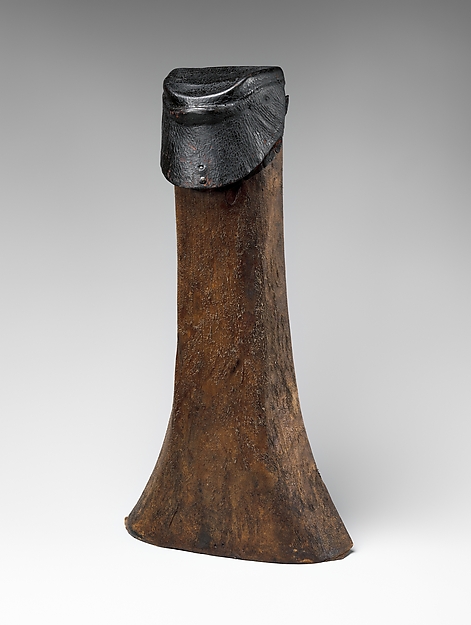
Quiver with Eleven Crossbow Bolts
quiver, probably early 16th century; bolts, 14th–16th century
- Date
- quiver, probably early 16th century; bolts, 14th–16th century
- Culture or place
- Western or Central European; quiver, possibly German
- Medium
- Wood (oak, probably birch), tanned hide (possibly badger), paper, leather, steel, iron alloy
- Size
- quiver H. 17 9/16 in. (44.6 cm); W. bottom 11 7/16 in. (29 cm); Wt. 15.8 oz. (448 g); L. of bolt (b), 16 in. (40.6 cm); L. of bolt (c), 15 1/4 in. (38.7 cm); L. of bolt (d), 15 1/4 in. (38.7 cm); L. of bolt (e), 16 3/8 in. (41.6 cm); bolt (f), L. 14 1/2 in (36.8 cm); L. head 2 15/16 in. (7.5 cm); W. head 11/16 in. (1.8 cm); Wt. 2.4 oz. (68 g); L. of bolt (g), 15 3/4 in. (40 cm); L. of bolt (h), 15 1/8 in. (38.4 cm); L. of bolt (i), 15 3/4 in. (40 cm); L. of bolt (j), 15 3/4 in. (40 cm); bolt (k), L. overall 15 7/8 in. (40.3 cm); L. head 3 in. (7.6 cm); W. head 2 1/4 in. (5.8 cm); Wt. total 2.7 oz. (75 g); L. of bolt head (l) 3 in. (7.6 cm)
- Type
- Archery Equipment-Arrows & Quivers
- Museum
- The Metropolitan Museum of Art
- Licence
- Public domain: free to use, no permission needed

More from Western or Central European; quiver, possibly German
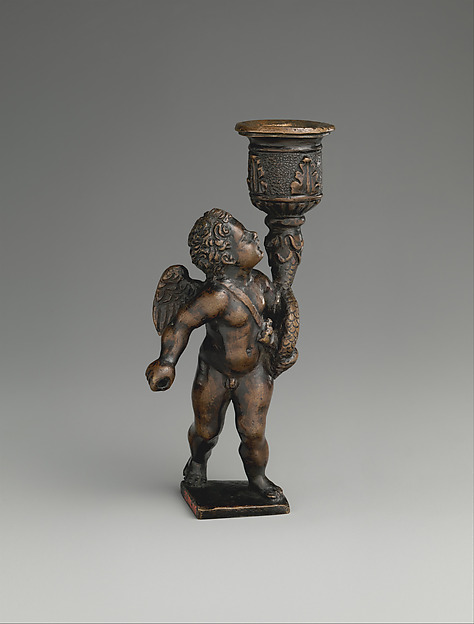 Cupid bearing a quiver and a candle socketmid-16th centuryThe Met
 Powder Flasklate 16th centuryThe Met
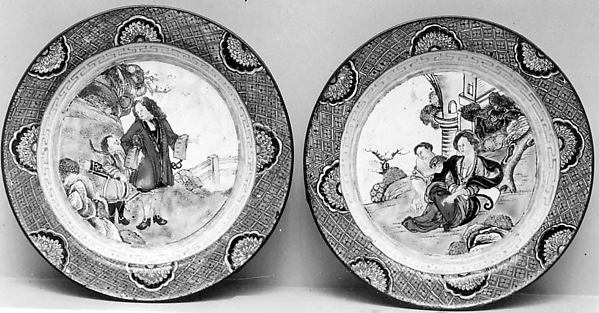 Dish with European Man and Childlate 18th–19th centuryThe Met
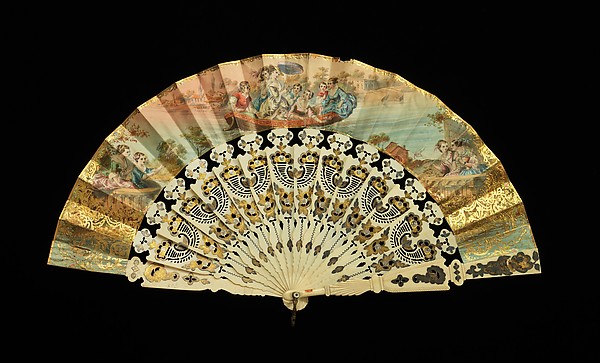 Fan1860–70The Met
 Miniature collector's cabinetBernard Salomon, ca. 1600The Met
 Smith & Wesson Model 1 ½ Second Issue Revolver (serial no. 30451) with CaseSmith & Wesson, 1869The Met
 Forts Zeelandia and Provintia and the City of TainanUnidentified artist, 19th centuryThe Met